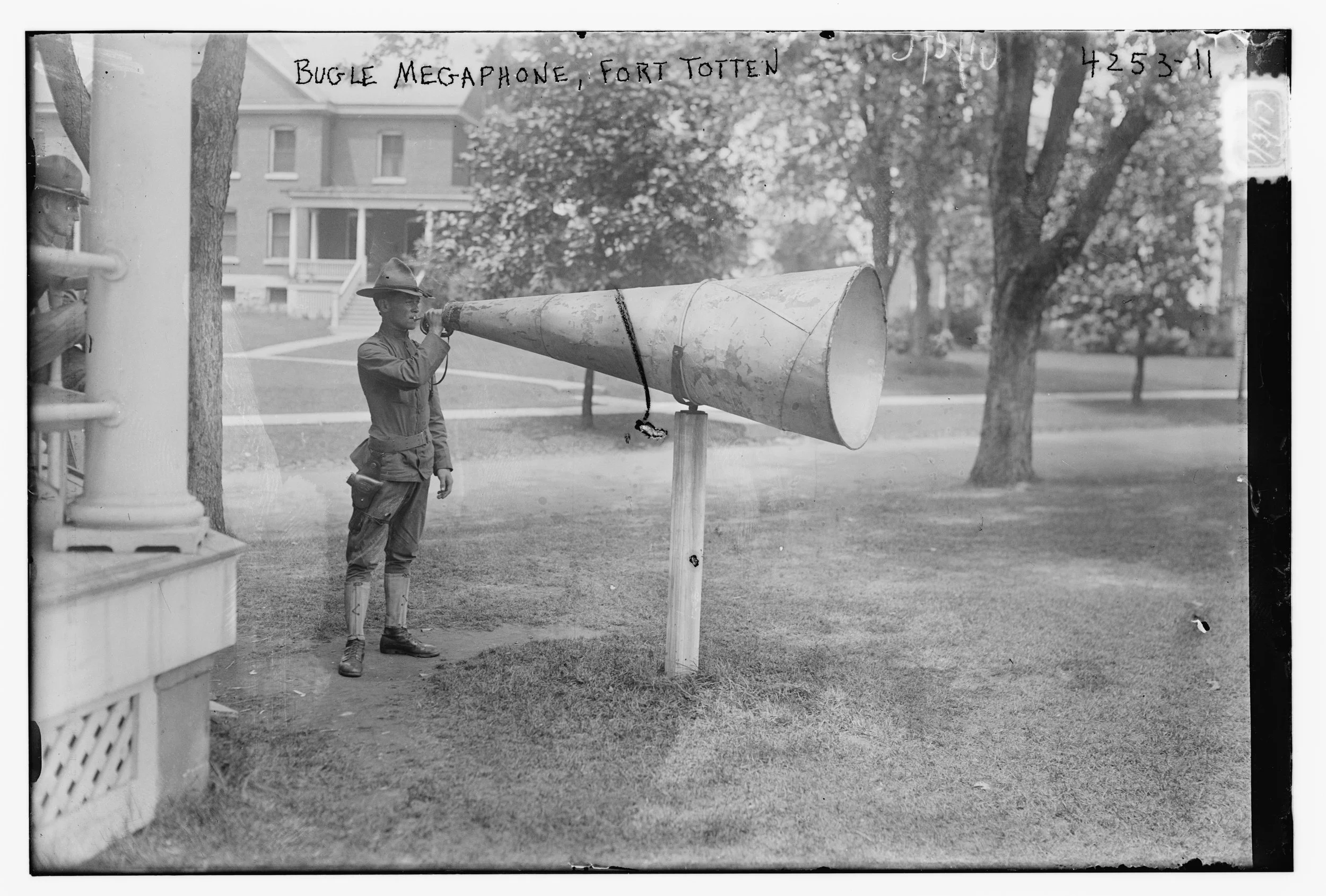
Getting your message across, 1917. A soldier uses a bugle megaphone at Fort Totten, New York. Photograph by Bain News Service. Courtesy of the Library of Congress.
1. Offer a workshop to several groups
The Canada Revenue Agency booked seven half-day workshops for groups including financial reviewers and scientists. Although the core skills were similar across all groups, the live interactive exercises were based on the reports each group actually wrote.
2. Bring a speaker to your annual meeting
At the Canadian Investor Relations Institute’s annual meeting, StoryCorp delivered Signature Stories for Investor Relations, a keynote which explored a fresh perspective on storytelling that the audience could use in their day-to-day professional lives.
3. Book a one-off session for a specific need
At Canadian Blood Services, operations teams faced a practical question: Once you’ve solved a problem, how do you explain the fix to colleagues? In a three-hour, in-person workshop, participants in cross-functional teams worked from their own write-ups to practise explaining what happened, what changed, and why it mattered.
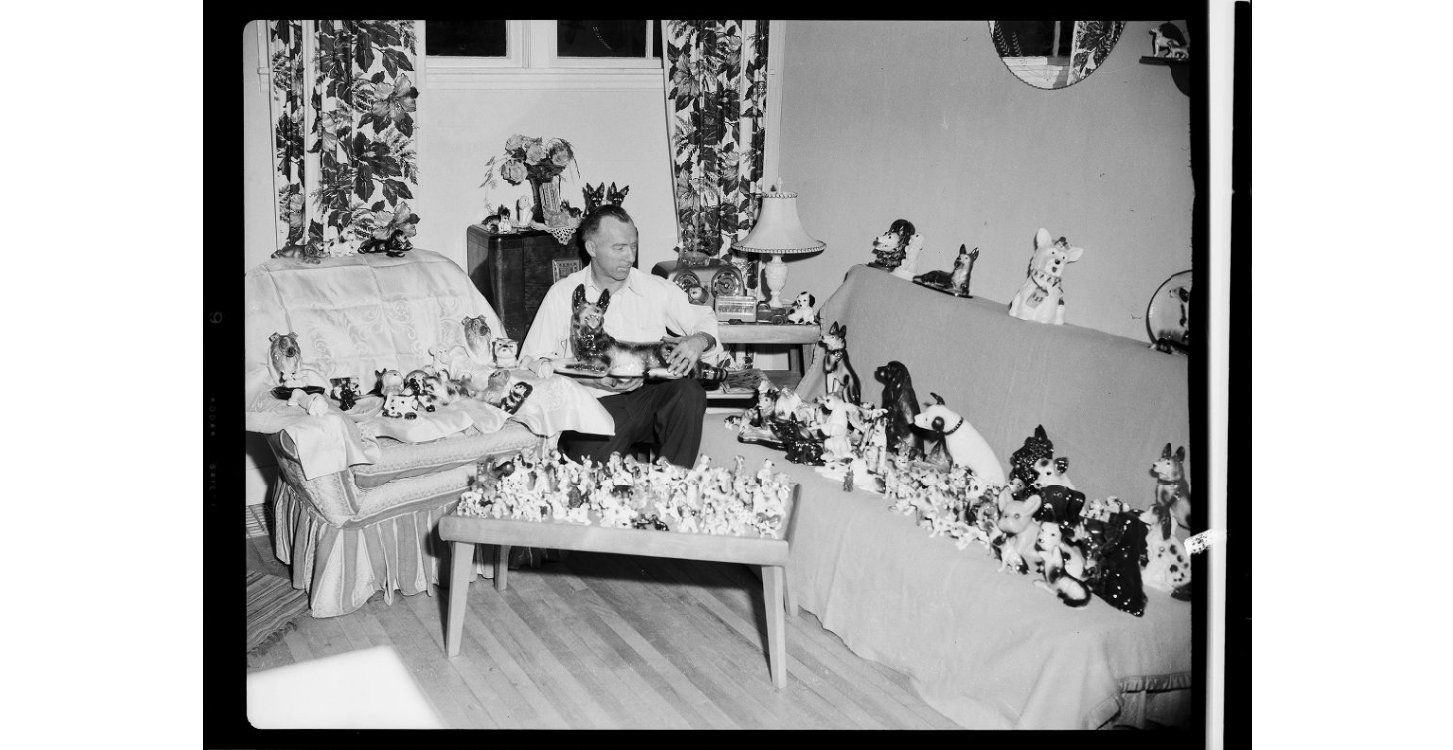
George C. Chapman, photographed in Bridgeport (now part of Kitchener), in 1954, with his collection of 500 dog figurines. Photograph from the Kitchener-Waterloo Record Photographic Negative Collection.
4. Build training into an existing learning program
The City of Kitchener included Storytelling for Leaders in its learning catalogue. CanWaCH Academy chose a session called Making Stats Matter: Effective Storytelling for Communications and Programming Success to offer their 114 member organizations like Canadian Red Cross, World Vision Canada, and UNICEF Canada.
5. Host a one-hour webinar
The Federation of Canadian Municipalities brought communications staff together over lunch to look at three tellings of the same origin story, getting specific about what a storyteller keeps, shortens, or drops altogether across different contexts and audiences.
6. Coach your own speakers before an event
Shell employees preparing personal stories for an employee event began with an individualized story-development program, then came together in small groups and received personalized feedback on their drafts.
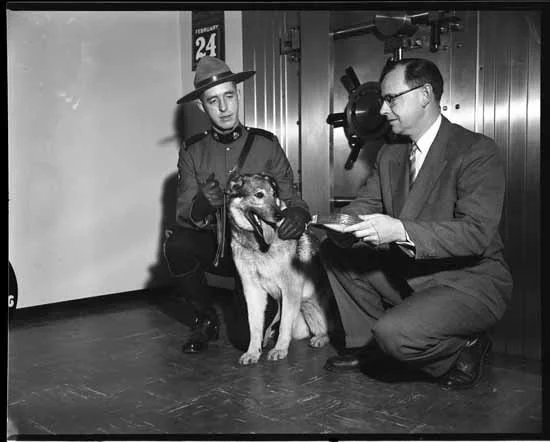
Tracking dog Silver receives a special collar from bank manager Edwin Bowser after she and RCMP Constable Keith Sanderson helped recover most of the money stolen in a robbery. Burnaby, British Columbia, February 24, 1955. Photograph from the Province Newspaper Collection. Courtesy of Vancouver Public Library.
7. Schedule a series at a pace that suits your team
The RCMP spread workshops on recruitment storytelling nearly a month apart. Lululemon chose a course, Storytelling for Organizations, that followed eight weeks of structured learning.
8. Bring StoryCorp back for a different team or topic
At Sun Life, StoryCorp delivered virtual training as part of the Comms Competencies program, a hybrid “offsite” on storytelling and virality, and Storytelling for Impact at global HQ during a large meeting on digital transformation and AI strategy.
9. Connect your in-person and remote teams
Export Development Canada brought staff together for a half-day storytelling workshop, with some attending in an Ottawa meeting room and others joining on Microsoft Teams. Everyone worked with familiar examples, from research profiles to newsletters and social posts.
10. Offer the same training in English and French
Employment and Social Development Canada booked multiple Storytelling with AI: Tools and Techniques workshops for separate English- and French-speaking groups, complete with delivery and materials in each official language.
Looking for your own way to use storytelling training? Get in touch.