What Library and Archives Canada, the Canadian Museum of History, and Parks Canada can teach us about finding stories in unlikely places.
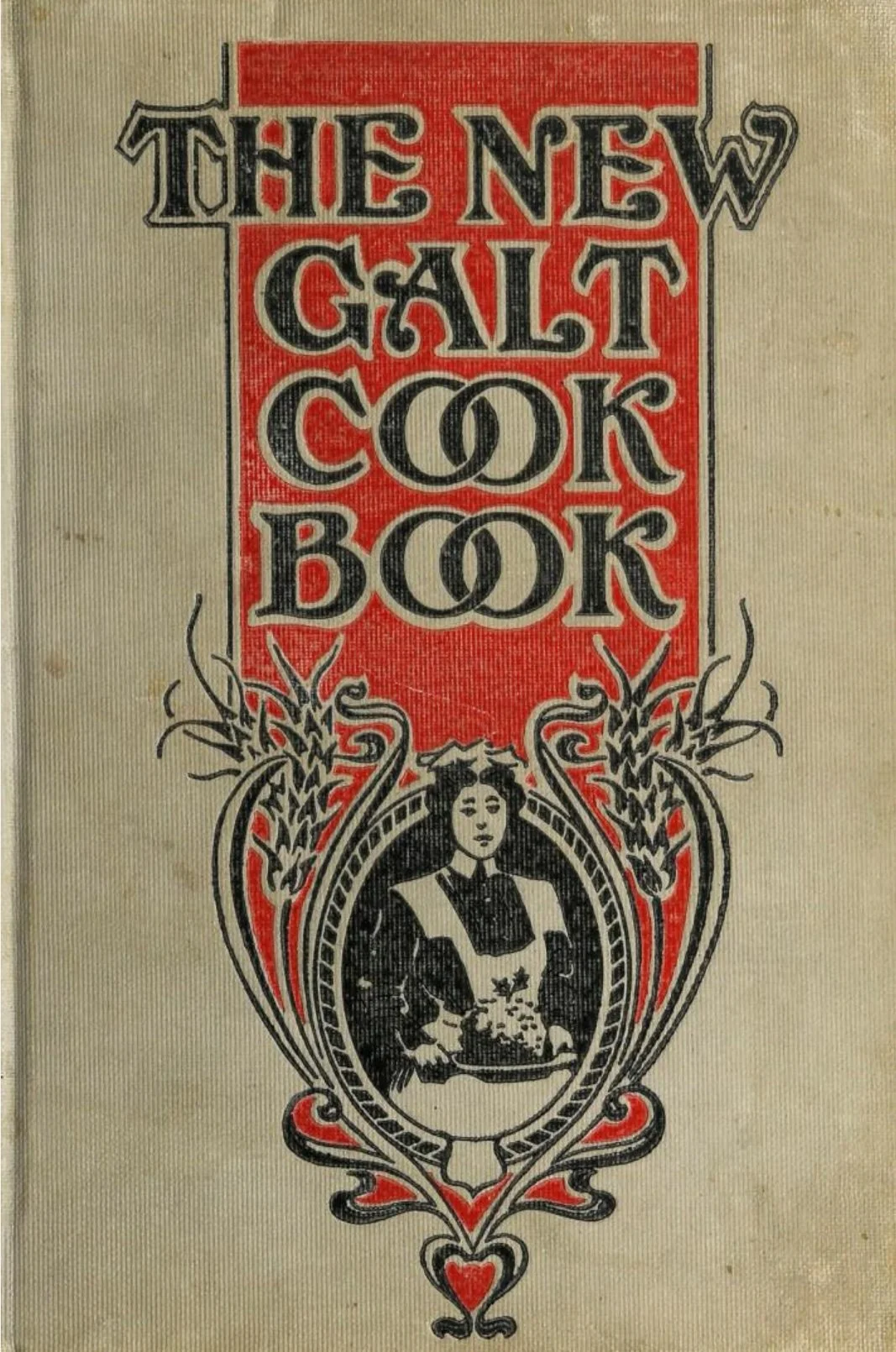
The New Galt Cook Book’s snazzy cover.
Library and Archives Canada: creating a 19th-century recipe in a 21st-century kitchen
LAC works with an almost unimaginable abundance of material, from Wilfrid Laurier’s love letters to some of the oldest cookbooks in Canada. The latter, at first glance, may not be the most appealing material. But in the blog series “Cooking with LAC,” these cookbooks tell a series of wonderful and unexpected stories. “Cream puffs from 1898” features a charmingly simplistic recipe from the New Galt Cook Book. Here it is, in its entirety, just butter, flour, eggs, custard, and enough uncertainty to make a modern baker (in this case, the reference archivist Ariane Gauthier) nervous:
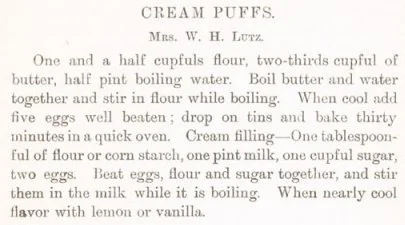
The recipe in full, so you can try it for yourself.
Gauthier has to decide what a “quick oven” means for a modern stove, improvise a piping bag, and find out whether the recipe still works. We have a reason to keep reading: will the cream puffs turn out?
The recipe also gives us a window into tradition, and shows us just how much things have changed since 1898. Granulated sugar, for instance, was formerly inconceivable for the lower classes, and leads us to stories about everything from changing food costs to import tariffs. The use of lemon reveals stories about railways and urban growth. And the very format of the recipe itself—so different from the ones we use today—tells us a lot about tacit domestic knowledge at the turn of the 20th century.
Canadian Museum of History: connecting objects to lived experience
When the Canadian Museum of History can cover 15,000 years in a single exhibition, the most effective way to make that scale accessible is often through individual lives or specific objects.
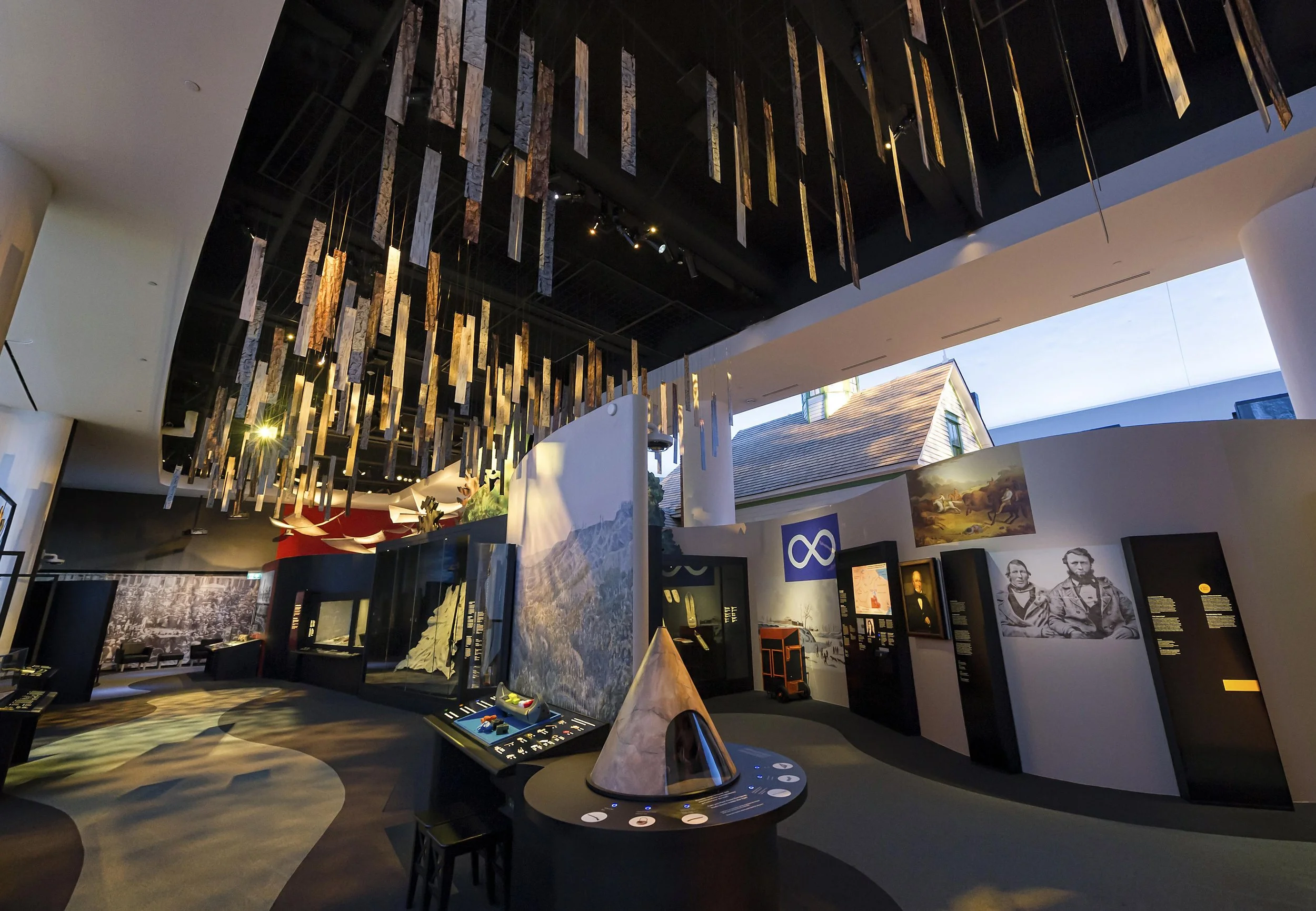
The Canadian History Hall at the Canadian Museum of History. Photo: Dennis Jarvis / CC BY-SA 2.0.
One family tree, hundreds of descendants
In the Canadian History Hall, a three-dimensional family tree follows Catherine Moitié, who arrived in New France in 1663 at age 14. Four years later, she married Désiré Viger, a fellow servant in Montréal, and had ten children. Within five generations, she had more than 600 descendants. In the gallery, their names become branches and leaves, a tangible narrative for what might otherwise remain a staid historical claim about the filles du roi.
A stone from a greenhouse
The Witness Blanket, created by Indigenous artist Carey Newman, gathers contributions associated with residential schools and Survivors into a cedar-framed work.
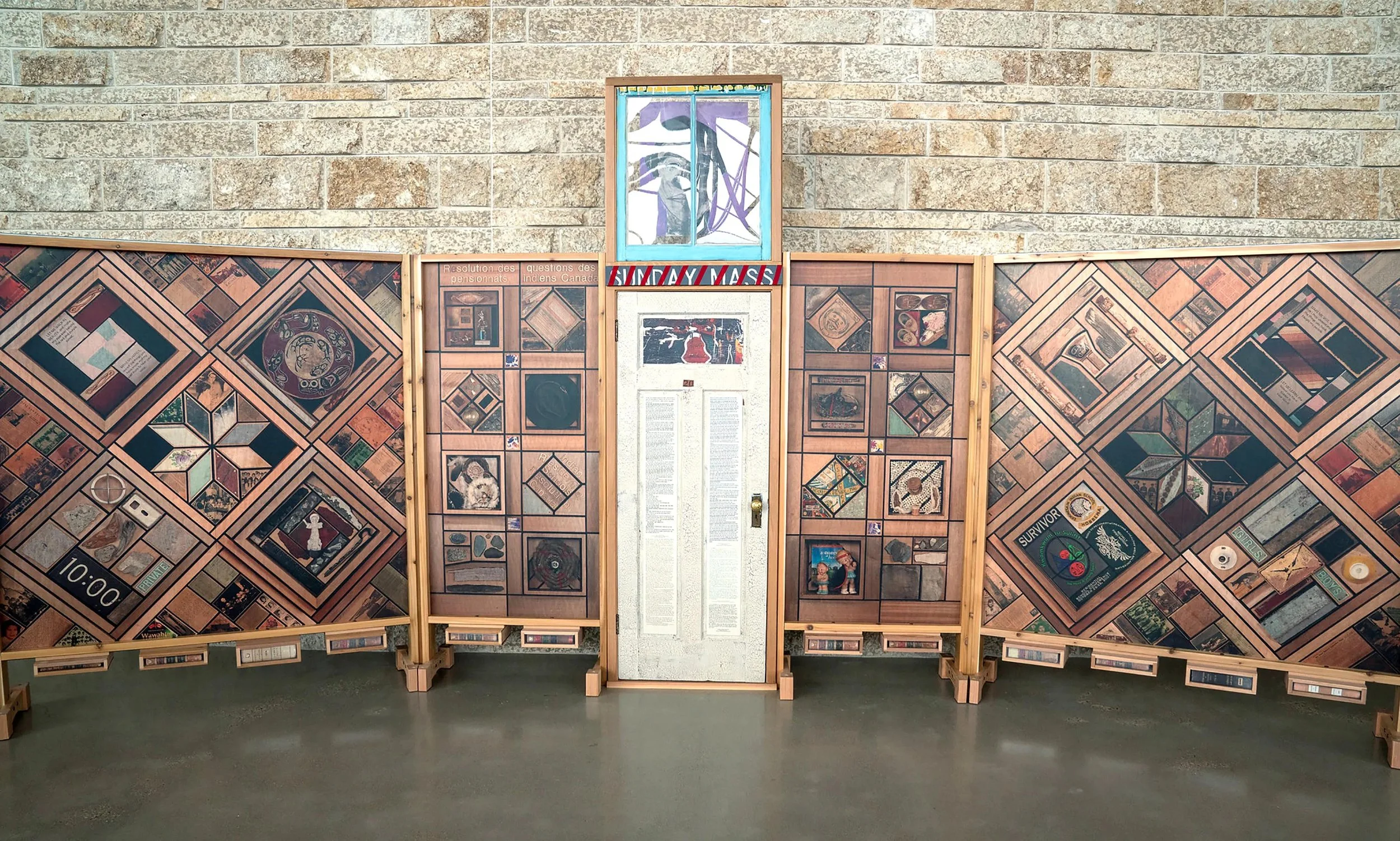
A photographic reproduction of The Witness Blanket, an installation by Indigenous artist Carey Newman, exhibited at the Canadian Museum of History. Photo: Canadian Museum for Human Rights.
Consider one of the objects represented there: a stone from an Inuvik community greenhouse located on a former hockey rink used by residential schools. At this site of past trauma, people now grow food. Survivor Lucy Kuptana chose the stone because the greenhouse represents a place that at once holds painful memories and can be a source of gathering and healing. Her story is what gives the stone its meaning.
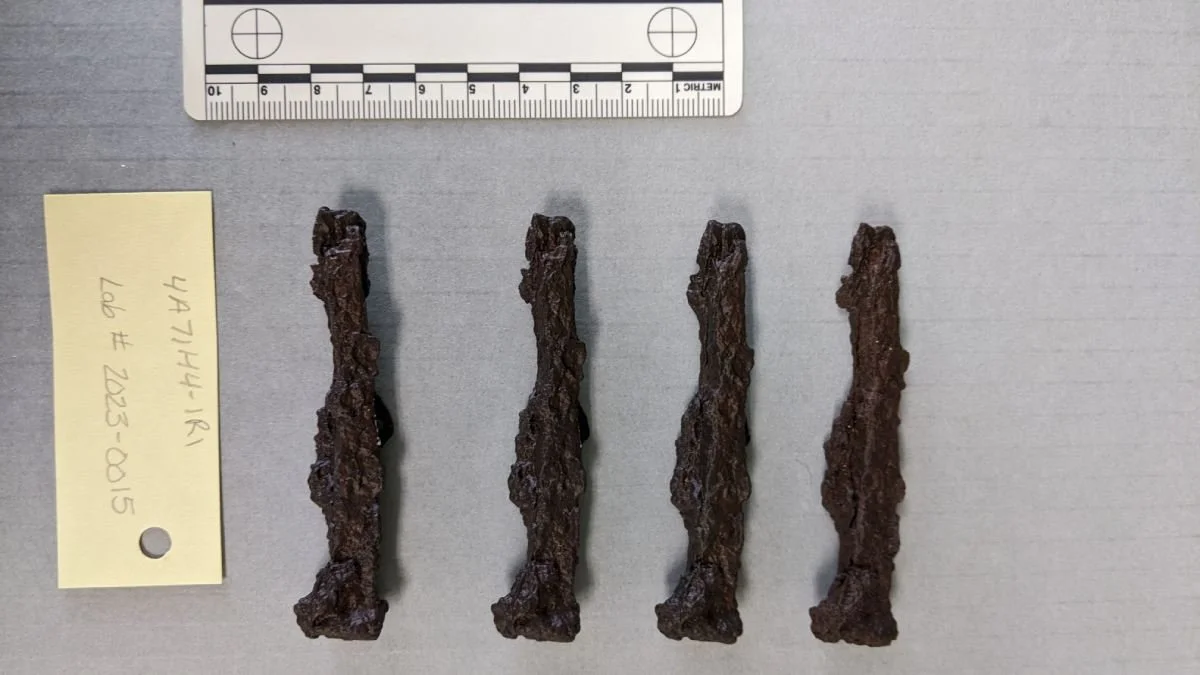
Reproductions of an iron nail excavated at L’Anse aux Meadows, evidence of Norse ironworking in Newfoundland around 1,000 years ago. Photo: Parks Canada.
Parks Canada: iron nails, paper trails . . .
In Parks Canada’s Google Arts & Culture story on L’Anse aux Meadows, an iron nail serves as a surprisingly rich entry point. It’s small enough that the Norse could have carried across the Atlantic, but Parks Canada archaeologist Birgitta Wallace’s team discovered that it was made of local “bog iron” smelted a thousand years ago—the earliest known smelting in North America. But they’d been smelting for over 1400 years before coming to Newfoundland. The story includes media from the metalworking recreations at the visitor centre, and before you know it, a simple nail has sucked you into a world you didn’t even know existed.
. . . and whale oil and roofing tiles
In December 1565, the Basque galleon San Juan was ready to sail from Red Bay, Labrador, with nearly a thousand barrels of whale oil. On the Parks Canada’s ReCollections podcast, we learn that it never made it home. It sat undiscovered (in just 10 metres of water!) for over 400 years, until a historian started digging into a Spanish archive.
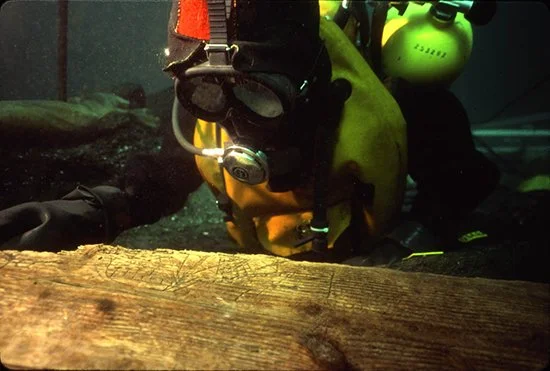
An archaeologist examines a ship carved into a plank from the presumed San Juan, which sank at Red Bay, Labrador, in 1565. Probably etched by a crew member, the drawing shows a galleon at anchor with a small whaling boat tied to its stern. Photo © D. Pagé / Parks Canada.
In the records, Selma Barkham noticed that ships leaving with whale oil had arrived with red roofing tiles. To find the San Juan, she went in search of the tiles, finding pieces in a cabbage patch near Red Bay, with their familiar curve from the roofs of Basque farmhouses. To find the ship itself, Barkham traced a path that strong north winds would have taken it, toward Saddle Island. In 1978, Parks Canada divers found the galleon there in three days.
In the excavation, archaeologists like Marianne Stopp catalogued every artifact, including walnuts, which as Stopp says, were “a very common food in the Basque Country. Still are, and so we had some insight into what they were eating. There was shoe leather fragments, meters and meters of rope, hemp rope, a compass housing.” And even, surprisingly, some graffiti.
As Stopp describes, “It was a clear, sunny day, which wasn't very frequent in Red Bay, the rays of the sun seemed to hit the water in a way and come to the bottom in a certain way. As I was getting ready to go to the surface, I noticed something on a ship's timber, I swam over and realized that it was an etching of probably that very vessel that a Basque whaler had carved into the side of the ship.”
Want to help your team find and tell stories like these? Get in touch about storytelling training.